Electrical rewiring is a critical component of any major renovation project. It involves replacing outdated or unsafe wiring systems to ensure they meet current safety standards. This process not only improves overall safety but can also enhance the energy efficiency of your home.
Over time, wires can deteriorate, connections can loosen, and safety hazards can develop. Therefore, understanding the necessity of rewiring can prevent potential electrical fires and other hazards.
Outdated electrical systems often cannot accommodate modern energy demands, leading to frequent circuit trips. Rewiring provides an opportunity to upgrade to a more robust system designed to handle today’s technology. It can also contribute to a higher resale value of your property, as potential buyers often seek homes with updated safety features. Ensuring your home’s wiring complies with modern standards can provide peace of mind and improve your property’s marketability.
If your home was built several decades ago, it likely has wiring systems that are no longer up to code. These outdated systems can be a source of danger if not addressed during renovations. Electrical rewiring as part of your renovation project ensures compliance with electrical codes and regulations. Although it may seem like a secondary concern, prioritizing electrical rewiring can save you time and expense in the long run.
Assessing the Need for Electrical Rewiring
Before embarking on any rewiring project, it’s essential to assess whether your property truly requires this overhaul. A professional inspection by a certified electrician can help determine the state of your current wiring system. Signs that rewiring might be necessary include flickering lights, frequently tripped circuit breakers, or a persistent burning smell. Additionally, homes built more than 30 years ago are prime candidates for rewiring due to evolving safety standards. Taking the time to assess these factors ensures your project is necessary and focused.
Electrical rewiring can be a significant investment, and it’s crucial to weigh the benefits against the costs. Consider the longevity and reliability of your existing system versus the potential risks and inconveniences of leaving it unaddressed. If you’re continuously adding new electrical devices or upgrading equipment, a rewired system can accommodate higher power demands effectively. On the other hand, if you’re planning an extensive renovation, integrating rewiring might be more cost-effective than waiting for an electrical issue to arise. Ultimately, understanding your specific needs and projecting future energy demand plays a significant role in your decision.
A thorough assessment not only guides your decision-making but also helps plan the scope and budget of your renovation. During an inspection, professionals can spot hidden issues, such as rodent damage or poorly executed past repairs. Addressing these problems as part of your renovation project can prevent costly and dangerous incidents later. By being proactive about electrical rewiring, you are safeguarding your home, ensuring compliance, and future-proofing your investment for years to come.
Planning Your Electrical Rewiring Project
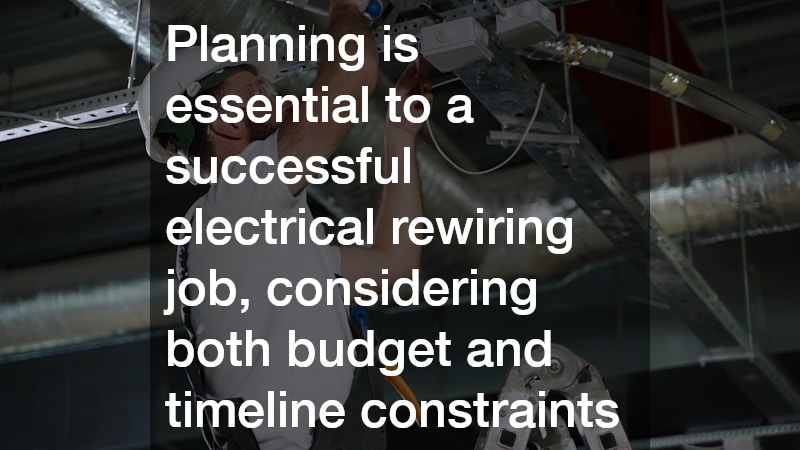
Planning is essential to a successful electrical rewiring job, considering both budget and timeline constraints. Scheduling an initial consultation with an electrician will give you a realistic idea of the costs involved. This is also a good opportunity to discuss the scope of work and any specific requirements you might have, such as adding outlets or incorporating smart home technology. With a detailed plan, you can anticipate potential challenges and make informed decisions throughout the project. By aligning your goals and resources, you can ensure a smooth renovation process that aligns with your vision.
Your project’s timeline should consider the extent of work needed and other concurrent renovation tasks. Coordinating different tradespeople requires careful scheduling to avoid conflicts and delays. Establishing clear communication with professionals involved ensures that the rewiring project integrates seamlessly into the broader renovation timeline. Keep in mind that rewiring may involve cutting into walls, so timing it before cosmetic renovations like painting or flooring can prevent unnecessary rework. Effective planning will not only streamline the renovation but can also optimize your overall renovation budget.
Another aspect of planning involves obtaining necessary permits and adhering to local building codes. Working with a licensed electrician ensures compliance with these regulations, which is critical to passing inspections and avoiding fines. Thorough documentation of the rewiring work will provide peace of mind and an invaluable resource in the future, should you wish to renovate further or sell the property. Being proactive with these bureaucratic steps saves you from potential legal issues and ensures your project is executed correctly and legally.
Choosing the Right Professionals for Your Project
When it comes to electrical rewiring, the expertise of the professionals you hire can make or break the project. It’s crucial to select a licensed and experienced electrician with a solid reputation. Research prospective contractors, taking note of reviews and asking for recommendations from friends or neighbors. Meeting potential electricians in person lets you discuss your project expectations and gauge their understanding and approach. This interaction is essential for evaluating whether they are the right fit for the job and can meet your standards.
Don’t shy away from asking questions about the electrician’s experience, previous projects, and certifications. Understanding their work process, timelines, and quoting system can give you insight into their professionalism and reliability. A skilled electrician should also be transparent about potential challenges and willing to offer practical solutions. Their ability to communicate effectively will ensure that your project progresses smoothly and any arising issues are swiftly addressed. By choosing qualified professionals, you’re investing in the safety and quality execution of your electrical rewiring.
It’s also worth considering electricians who stay updated with the latest technology and industry training. As home automation becomes increasingly popular, your rewiring project should align with future technological advancements. Professionals open to new techniques and innovations can offer suggestions that enhance your home’s functionality and efficiency. Properly executed rewiring not only secures your property but also enhances your living experience by integrating seamlessly with modern conveniences. Trusting the right professionals with your rewiring ensures your property renovation stands the test of time.